

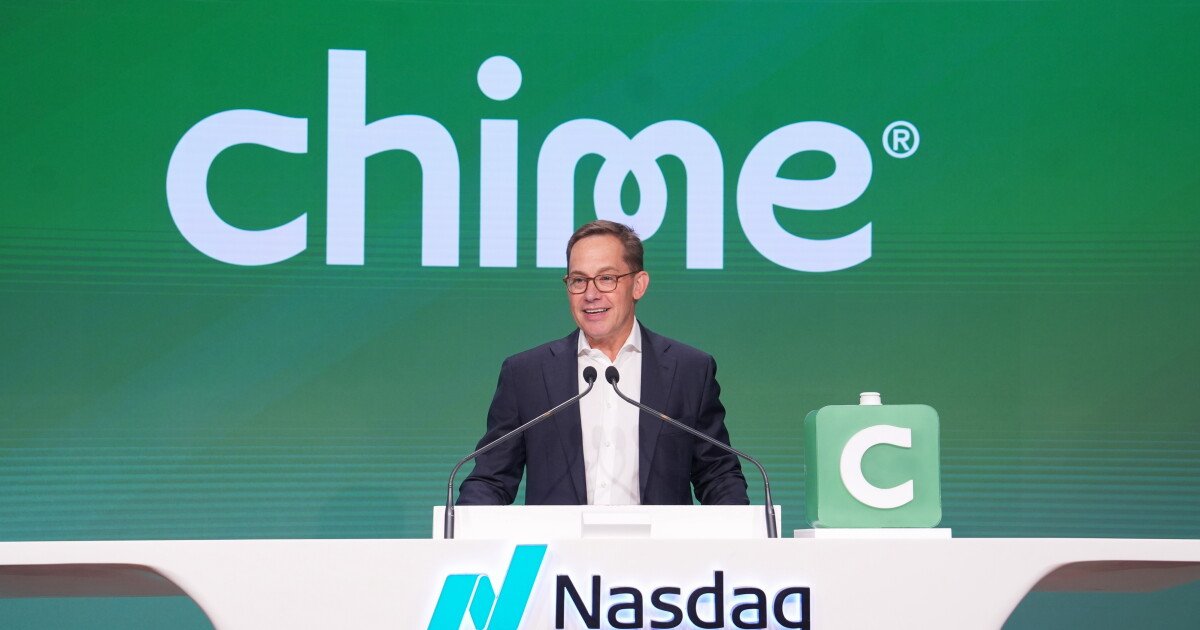
Chime, the digital banking pioneer, has announced it will acquire Stride Bank, a longtime partner based in Enid, Oklahoma, for $590 million in cash. The move marks a major milestone for the fintech, which has built its reputation on challenging traditional fee-based banking models. If approved, the deal will transform Stride into Chime Bank, a wholly owned subsidiary led by Stride’s current chairman and CEO, Brud Baker.
Why Chime Decided to Buy a Bank
Chime has relied on Stride for banking services for over seven years. Now, the company is taking the next logical step by owning its own charter. According to Chime CEO Chris Britt, this was always part of the plan. “The opportunity for us to actually own a charter was really not a matter of if, it was just when,” Britt said. “Our ambition is to be the largest provider of primary bank accounts in America. So naturally, at some point, it would make sense to [own a charter], and we feel like now is the when.”
By owning its own bank, Chime aims to:
- Build and launch new products more quickly
- Eliminate partner banking fees
- Reduce funding costs
- Streamline operations by connecting its proprietary technology core, Chime Core, directly with Stride’s banking infrastructure
This integration is especially important in an era where artificial intelligence is accelerating product development. “You can use this technology to build things faster than ever and innovate, but at the end of the day, in a highly regulated category like ours, when you have multiple handoffs and different data sets on different parties and so forth, it just doesn’t allow for the most streamlined set of operations,” Britt explained.
Regulatory Approvals and Timeline
The transaction is expected to close in the first half of 2027, pending approvals from the Office of the Comptroller of the Currency and the Federal Reserve. After the deal closes, Chime plans to consolidate its banking activities at Stride while keeping its assets below $10 billion for the foreseeable future. This is a strategic choice, as banks with assets above $10 billion are subject to debit interchange caps.
Chime also noted in a press release that buying an existing bank, rather than applying for a de novo charter, “provides a faster and more proven path to full-stack ownership.”
Financial Outlook and Market Reaction
Alongside the acquisition announcement, Chime raised its full-year guidance. The company now expects third-quarter revenue to reach $705 million, representing roughly 30% year-over-year growth. For the full year, Chime projects revenue between $2.76 billion and $2.77 billion, a 26%–27% increase from the previous year.
Analysts have responded positively to the news. Keefe Bruyette & Woods analyst Sanjay Sakhrani called the acquisition an “efficient way to drive vertical integration, creating expense and funding upside.” Shares of Chime rose as much as 11% in after-hours trading on the announcement.
What This Means for Chime’s Future
Owning a bank charter gives Chime greater control over its operations and paves the way for expanded lending capabilities. By removing the intermediary, the company can offer more competitive products and potentially improve its margins. For customers, this could translate into faster feature rollouts and a more seamless banking experience.
As Chime moves closer to becoming a fully chartered bank, it signals a broader trend in the fintech industry: the line between digital innovators and traditional financial institutions continues to blur. For Chime, this acquisition is not just about owning infrastructure—it’s about positioning itself for long-term growth in a competitive market.