

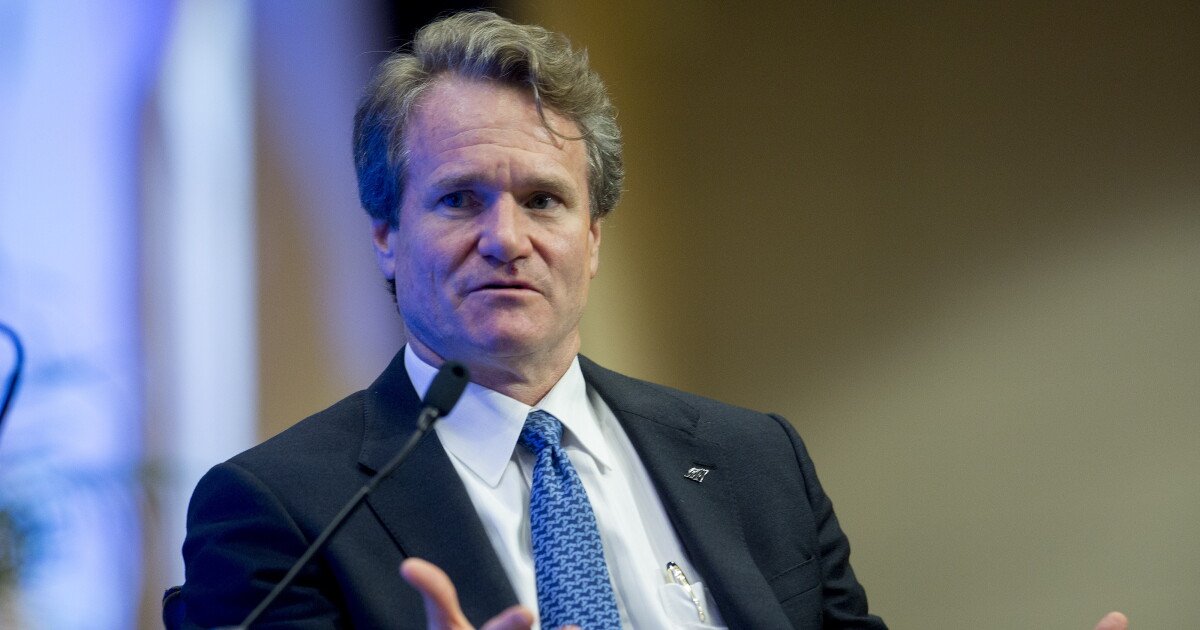
Leaders of two of the largest U.S. banks responded on Monday to growing safety concerns about artificial intelligence, acknowledging the recent alarm over the technology’s rapidly expanding capabilities.
Speaking at the Barclays Global Financial Services Conference in New York, top executives at Bank of America and PNC Financial Services Group both addressed the heightened anxiety that reached a fever pitch last week as tech industry insiders warned of AI’s dangers.
PNC’s Cautious Approach to AI Agents
Mark Wiedman, president of the $616 billion-asset PNC, emphasized the importance of controlling AI agents.
“As we’ve seen very notably in public discourse in the last few days, making sure agents are doing what they’re supposed to do and not doing something else is a top priority for us,” Wiedman said. “So we’ve got to walk cautiously because that’s going to be a challenge, I think, for every large organization using AI.”
He added that PNC is working to address the danger of AI agents becoming too aggressive in their actions. “Is the agent going to be a little bit too aggressive in what they’re trying to get done?” Wiedman said. “We’re trying to make sure we keep that under control.”
Bank of America’s Commitment to Human Oversight
Bank of America CEO Brian Moynihan addressed similar fears, assuring listeners that the bank’s bots would never operate without human supervision.
“This weekend was a lot about the risk in AI, and that largely is around agents just left to operate,” Moynihan said. “We just don’t do that.”
Moynihan explained that BofA decided long ago that human employees would always check anything AI produces for customers. He also noted that while cyberattacks are another risk, the bank’s cybersecurity team is actively patching their systems.
“The debate this weekend is more about agents and what can they do if you let them go and operate,” Moynihan said. “But for [BofA], we’re trying to control the risk.”
Background: A Week of Rising AI Anxiety
The comments came after a week of escalating concerns over AI. On Tuesday, Jacob Coxon, a researcher at AI company Anthropic, resigned and posted a series of social media messages about his worries, including that AI firms were irresponsibly rushing the technology toward “self-improving superintelligence” and “gambling with our lives.”
“The people building AI earnestly believe that it could kill us all by the end of the decade,” Coxon wrote.
On Saturday, Anthropic CEO Dario Amodei spoke out, not to dismiss Coxon’s warnings but to largely agree with them. In a nearly 4,000-word essay, Amodei echoed concerns that AI could be used for cyberattacks or bioterrorism, or even break free of human control. He argued that AI companies “must slow the pace at which we improve the capabilities of AI models” — a striking rebuttal of the AI arms race from one of its participants.
By the end of the day, the leaders of three other AI producers — Sam Altman of OpenAI, Demis Hassabis of Google DeepMind, and Elon Musk of SpaceXAI — said they agreed.
Banks’ Embrace of AI and Its Risks
American banks, including BofA and PNC, have embraced AI in recent years as a tool for cutting costs, helping bankers do their jobs, and increasing efficiency. BofA has invested heavily in its AI virtual assistant, Erica, and PNC has touted its strategy of AI independence, building its own GPU compute and small language models.
But on Monday, executives at both banks were forced to discuss the technology’s dangers as well as its benefits.
Moynihan also acknowledged the important role AI is playing in the broader economy, as spending on the technology’s build-out drives much of U.S. growth.
“It’s a big investment cycle that will continue on, and it may go faster or slower depending on the announcements this weekend,” Moynihan said. “But at the end of the day, the capacity is going to be built.”