

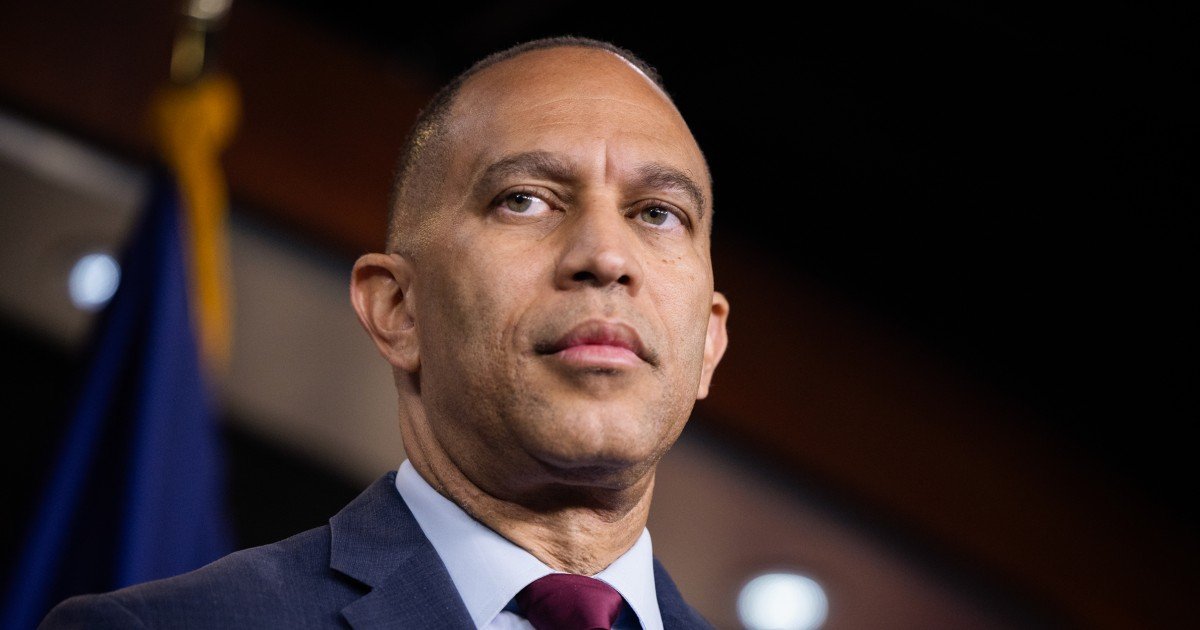
As the 2026 midterm elections approach, House Democrats are coalescing around a legislative agenda that prioritizes healthcare, aiming to reverse recent cuts and address the rising cost of living. Minority Leader Hakeem Jeffries has outlined key proposals that he believes will unify the party and resonate with voters concerned about affordability.
Jeffries’ Four-Point Plan for a Democratic Majority
In a recent statement, Jeffries detailed four legislative priorities that would receive “uniform Democratic support” if the party regains control of the House. The first two focus squarely on healthcare, while the others address economic and foreign policy contrasts with the current administration.
- Reverse Medicaid cuts: Democrats aim to restore funding that was reduced under the Trump administration’s budget reconciliation bill.
- Extend Affordable Care Act (ACA) tax credits: These subsidies, which expired last year, helped millions afford health insurance. Democrats want to revive them to lower premiums.
- Restore congressional authority over tariffs: Jeffries argues that Trump’s tariffs have increased costs for American families and that Congress should reclaim its constitutional role in setting trade policy.
- End U.S. involvement in the Middle East conflict: Jeffries referred to it as a “reckless and costly war of choice,” signaling a desire to de-escalate military engagements.
Healthcare as the Cornerstone of Affordability
Representative Don Beyer of Virginia, a key voice on economic policy, emphasized that healthcare is central to the affordability debate. He expects the first bill introduced by a Democratic majority, often symbolically designated as H.R. 1, to focus on restoring the hundreds of billions of dollars cut from Medicaid and ACA subsidies.
“In the affordability debate, nothing’s more central to it than healthcare,” Beyer said. “My expectation is that it’ll very much be about affordability one way or the other.”
Jeffries has also established five working groups to tackle affordability across different sectors: housing, healthcare, childcare, groceries and food, and gas and utilities. This broad approach reflects the party’s understanding that healthcare costs are intertwined with overall economic stress.
Divisions Within the Party: Incremental vs. Transformative Change
While there is consensus on reversing the Medicaid and ACA cuts, Democrats are split on how far to go. Progressive lawmakers like Alexandria Ocasio-Cortez argue that simply restoring funding is insufficient. They advocate for more systemic reforms, including breaking up monopolies in the pharmaceutical and insurance industries and addressing the root causes of healthcare inflation.
“Of course, we need to take immediate action on those ACA subsidies,” Ocasio-Cortez said. “But it doesn’t fix the deeper systemic issue that has led healthcare to be one of the primary drivers of inflationary costs over the last decade.”
On the other hand, moderate Democrats, such as Jared Moskowitz of Florida, prefer a more pragmatic approach, focusing on achievable legislative wins that can pass the Senate. “Let’s talk about what we can get done quickly to provide the American people economic relief,” Moskowitz noted.
Exploring a Middle Ground
Some centrist groups have proposed ideas like “free primary care for all” as a compromise between single-payer advocates and those who want to build on the ACA. This concept aims to reduce costs while preserving the existing insurance framework, potentially bridging the gap between the party’s factions.
Strategic Considerations for a Potential Majority
The scope of Democrats’ healthcare agenda will depend on the size of their majority. A narrow majority, as seen in recent years, might limit them to consensus-driven measures. Jeffries, known for his cautious approach, is wary of overpromising without knowing the political landscape.
A source familiar with Jeffries’ thinking outlined a three-phase strategy: immediate action in the first 100 hours to address urgent priorities, followed by more aggressive cost-lowering efforts and oversight in the first 100 days, and then a year-long push to build on those foundations.
Public Opinion and Political Advantage
Democrats have historically held an advantage on healthcare issues. A recent Reuters/Ipsos poll shows that Americans trust Democrats over Republicans to handle healthcare by a 38% to 25% margin. This edge could be pivotal in the 2026 elections, as voters consistently rank cost of living as a top concern.
Representative Brendan Boyle of Pennsylvania, who would chair the Budget Committee if Democrats take the House, stressed the urgency of reversing the Medicaid cuts. “When we take over in January, we will literally just be one month into the Medicaid cuts’ taking effect,” he said. “That’s the biggest bulk by far of their healthcare cuts and where millions more people are going to lose their healthcare.”
Looking Ahead: Ambitious Proposals and Messaging
Some Democrats, like Veronica Escobar of Texas, are pushing for a more expansive agenda that includes paid family leave, universal prekindergarten, and childcare subsidies, echoing the Build Back Better framework that stalled in the previous Congress. Escobar emphasized the need to address the profound financial strain on constituents, noting that some are paying more for utilities than their mortgages.
“There is a way to message it,” Escobar said. “Obviously, the bigger it is, the more challenging that is. But there would be one central theme: bring down the costs that are making your life difficult.”
As the 2026 elections draw nearer, House Democrats are positioning healthcare as a key battleground issue. Whether they pursue incremental fixes or transformative reforms, their goal remains clear: to make healthcare more affordable and accessible for all Americans.