

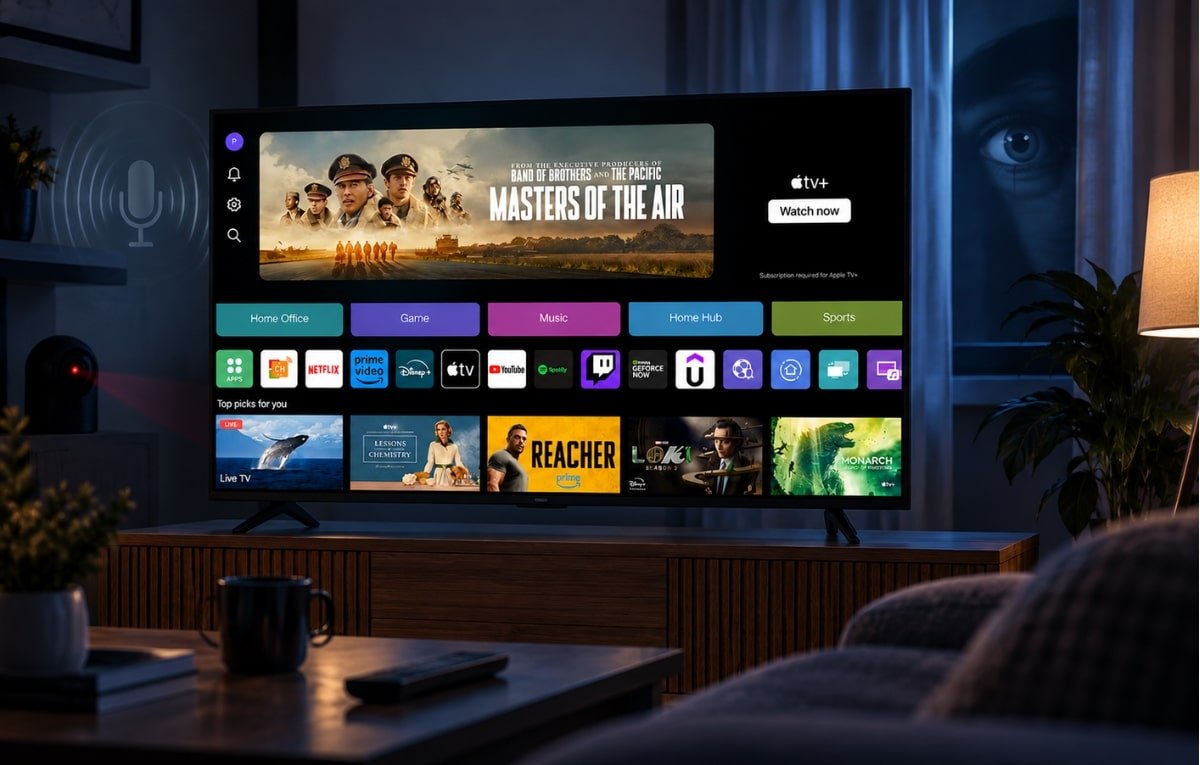
Recent investigations have uncovered concerning privacy issues with LG smart TVs, revealing that these devices may collect and record user data in ways that go beyond what many consumers expect. The findings, which include network scanning and audio recording even when the TV is in standby mode, have sparked renewed debate about data privacy in smart home devices.
What the Investigations Found
Collaborative testing by the YouTube channel Gamers Nexus, along with Level1Techs and independent security researchers, examined LG OLED TVs available at retail. The analysis of data traffic revealed several surprising behaviors:
- Network scanning: The TVs actively scanned local networks to identify nearby devices such as smartphones and smartwatches.
- Data collection: Information about the user’s location and surrounding Wi-Fi networks was gathered and transmitted to LG Ad Solutions, LG’s advertising arm.
- Voice recording in standby: Some TVs were found to record audio via their microphones while in standby mode, a particularly alarming discovery.
Voice Recording Even When Offline
One of the most concerning findings was that voice recording did not stop when the TV was disconnected from the internet. The tests indicated that audio files could be stored locally on the device and then uploaded to servers once the internet connection was restored. This raises serious questions about whether users can truly halt data collection by simply unplugging their TV from the network.
Understanding Automatic Content Recognition (ACR)
The investigation also highlighted the use of Automatic Content Recognition (ACR) technology, which analyzes audio and video samples to identify what content is being viewed. This technology is not exclusive to LG; it is widely used across smart TV manufacturers. ACR can track content from built-in apps as well as external devices connected via HDMI ports, meaning that even when watching cable or a gaming console, the TV may be collecting data.
Broader Industry Implications
Separate tests conducted by RTINGS suggest that similar content recognition technologies are prevalent across most smart TV brands. This indicates that the privacy concerns raised by these findings are not isolated to LG but reflect a broader industry trend.
Previous Controversies with LG
These new findings follow a previous incident in July when Gamers Nexus revealed that some LG monitors were automatically installing an app that collected device data and displayed pop-up ads for LG applications, alongside McAfee antivirus software. LG later announced that it would disable these pop-up ads in those monitors.
What This Means for Consumers
For consumers, these revelations underscore the importance of understanding the privacy settings on their smart TVs. While many devices offer options to limit data collection, the fact that some data gathering continues even in standby mode or when offline suggests that users may need to take more drastic steps, such as disabling network features or using external streaming devices, to protect their privacy.
As smart TVs become more integrated into our daily lives, the balance between convenience and privacy remains a critical issue. These findings serve as a reminder that the devices we bring into our homes may be collecting more data than we realize, and it is essential to stay informed about how that data is used.