

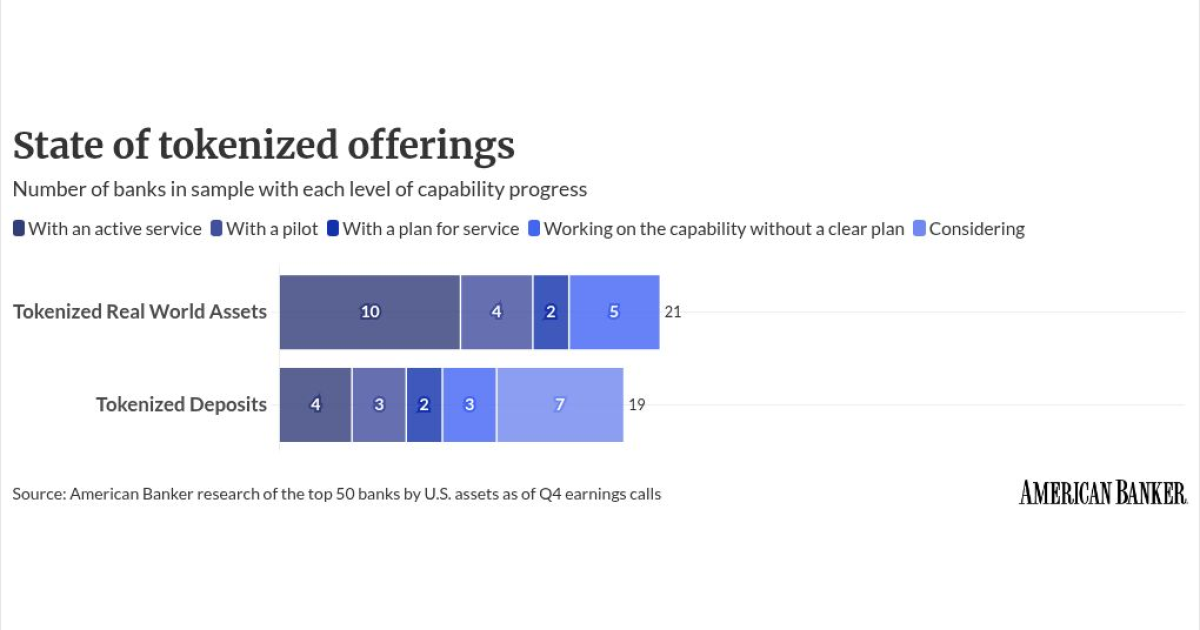
Tokenization is no longer just a buzzword or an experimental technology. For banks and financial institutions, it has become a strategic priority with the potential to reshape how capital is managed, deployed, and monetized. The shift is clear: tokenization projects are now viewed not as modernization initiatives but as engines for new revenue, lower operating costs, improved capital efficiency, and differentiated products. This article explores why tokenized collateral is emerging as a high-value use case and what it means for the future of financial services.
The Problem: Idle Capital and Fragmented Infrastructure
For decades, the financial system has struggled with a fundamental inefficiency: capital is often trapped by market hours, settlement cycles, and fragmented infrastructure. Banks and asset managers use collateral to support repo transactions, financing activities, and other operations, but legacy systems force them to pre-position assets well in advance. This practice leaves trillions of dollars in balance-sheet capacity sitting idle as collateral that cannot be moved quickly or efficiently.
The issue is not a shortage of high-quality liquid assets (HQLAs). The real problem is that these assets lack mobility. Valuable collateral cannot reach the right place at the right time, constrained by once-a-day settlements and cross-time-zone delays. This immobility creates operational friction and ties up capital that could otherwise generate returns.
The Solution: Tokenized Collateral and On-Chain Mobility
When collateral is tokenized and moved on-chain, its utility expands dramatically. Tokenized collateral can be mobilized anywhere, at any time, supporting multiple intraday transactions across borders. This eliminates the need for pre-positioning and reduces the amount of idle capital that banks must hold.
According to a report by Nasdaq and The ValueExchange, tokenized collateral could reduce operating costs by approximately 12% for global institutions. The report also highlights a compelling example: for a Tier 1 institution, mobilizing $4.8 billion in otherwise idle collateral could generate an estimated $346 million in additional annual interest income. These figures underscore the financial impact of tokenization, transforming it from a technology initiative into a capital efficiency imperative.
Beyond Speed: The Broader Benefits
Tokenized collateral offers more than just faster transactions. It enables:
- Improved intraday liquidity management: Banks can respond to funding needs in real time, reducing the risk of liquidity shortfalls.
- Greater value from existing balance sheets: Assets that were previously static can now be deployed to generate income.
- Enhanced collateral management: Asset managers can access broader distribution, faster settlement, and more flexible use of collateral.
- Support for 24/7 markets: In crypto and other round-the-clock trading environments, on-chain collateral prevents the need to over-position or lock up assets over weekends.
The Cash Leg: Tokenized Deposits and Digital Cash
Efficient collateral mobility requires an equally efficient cash leg. Tokenized deposits, stablecoins, and other forms of digital cash can support synchronized settlement, treasury, and liquidity-management workflows. This allows money and assets to move together, unlocking new payment, treasury, and transaction banking services. By integrating digital cash with tokenized assets, institutions can create seamless, end-to-end workflows that reduce friction and enhance operational efficiency.
Real-World Implementation: DTCC’s Tokenization Service
The Depository Trust and Clearing Corporation (DTCC) provides a prime example of how tokenization is moving from concept to reality. Following a No-Action Letter from the U.S. Securities and Exchange Commission (SEC), DTCC executed live production transactions on July 15, 2026. Participants were able to tokenize HQLAs already held at DTCC, including U.S. Treasuries, U.S. equities, and ETFs. These assets were not just moved on-chain; they were actively used to support purchases and sales, repo, securities lending, and margin activity.
DTCC is now moving toward a formal launch in October 2026, with the initial trades serving as a proof of concept. This milestone demonstrates that regulated market participants can drive real utility at scale, delivering durable, long-term business value.
The Road Ahead: Interoperability and Digital Markets
Tokenization creates digital assets, but interoperability creates digital markets. For tokenization to truly transform the financial system, institutions must move toward environments where securities, cash, collateral, and financial applications can interact seamlessly. This requires interoperability within networks, across applications, and ultimately across different blockchain networks.
Without interoperability, tokenization risks creating another set of fragmented markets, undermining its potential benefits. The next era of growth will be driven by institutions that put tokenized assets to work to deliver real, measurable business value. This means prioritizing use cases that demonstrate clear returns, such as tokenized collateral, and building the infrastructure to support them.
Conclusion
Tokenization is no longer a distant possibility; it is a present-day opportunity. By addressing the inefficiencies of idle capital and fragmented infrastructure, tokenized collateral can reduce costs, improve capital efficiency, and create new revenue streams. As institutions like DTCC lead the way, the focus must shift to interoperability and scalable implementation. The banks that embrace this shift will not only modernize their operations but also position themselves as leaders in the emerging digital asset economy.