

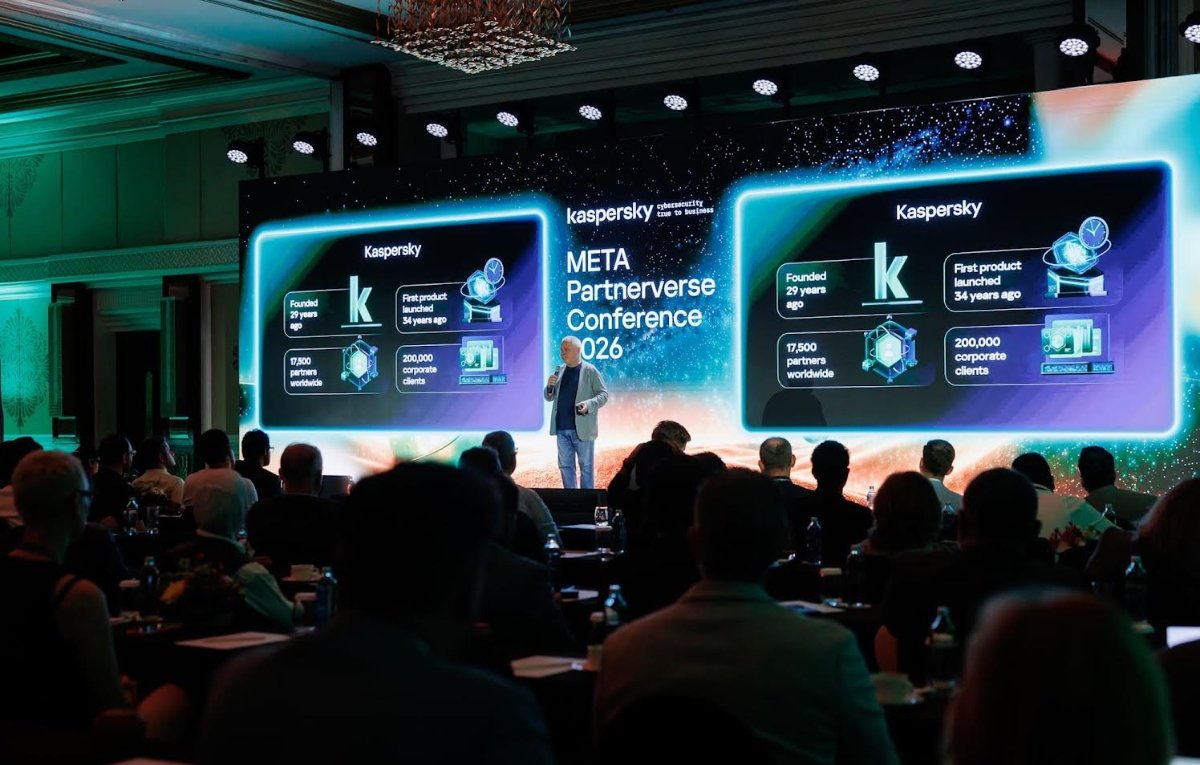
Kaspersky recently hosted its META Partner Conference 2026 in Bali, Indonesia, bringing together over 100 partners from 22 countries across the Middle East, Turkey, and Africa. The event served as a platform to unveil the company’s latest developments in cybersecurity, investment plans, and insights into the evolving digital threat landscape, alongside celebrating partner success stories.
Executive Insights and Regional Growth
The conference featured prominent Kaspersky leaders, including CEO Eugene Kaspersky, who delivered a keynote on the current state and future trajectory of the cybersecurity industry. He addressed the accelerating pace of digital threats and the corresponding evolution of defensive technologies.
Tawfik Derbasi, General Manager for the Middle East, Turkey, and Africa at Kaspersky, highlighted the growing adoption of cybersecurity solutions in the region. He reported a 21% increase in the company’s business during the first half of 2026, underscoring the robust demand for advanced protection.
Enterprise Portfolio Enhancements and AI Integration
A key focus of the conference was the latest additions to the Kaspersky Enterprise Portfolio. Presentations centered on enhanced artificial intelligence capabilities designed to strengthen threat detection and response. Attendees also explored customer and partner success stories that demonstrate the practical impact of these solutions.
Discussions delved into growth opportunities within the region’s complex digital landscape, addressing challenges related to managing cloud, on-premises, and hybrid infrastructures. Partners examined how Kaspersky solutions can be leveraged in areas such as Extended Detection and Response (XDR), container security, and other advanced protection technologies.
This conference aligns with Kaspersky’s broader strategy to deepen collaboration with its partners, recognizing them as essential drivers in expanding the reach of cybersecurity solutions to enterprises and clients across various sectors.
Global Partner Network and Program Tracks
Over the past three decades, Kaspersky has cultivated a global network of more than 18,000 partners, delivering cyber protection to millions of customers worldwide. The unified Kaspersky Partner Program is structured around four primary tracks:
- Sell: For distributors, system integrators, and value-added resellers.
- Deploy: For partners offering advanced cybersecurity services.
- Manage: For managed security service providers (MSSPs).
- Develop: For technology partners and developers.
Introducing Partnerverse: An Interactive Partner Portal
Kaspersky also unveiled its new interactive portal, Partnerverse, designed to celebrate its partner ecosystem and highlight their achievements. The platform offers a fresh way to explore success stories and collaboration opportunities.
Partnerverse employs a unique visual concept based on planets and orbits. Each partner is represented as a planet, categorized by their track (Sell, Manage, Deploy). The orbits around each planet indicate the partner’s level of engagement in Kaspersky programs—the number of rings reflects participation in multiple program categories, while the color denotes the partner’s tier:
- Silver: Foundational competency.
- Gold: Advanced expertise.
- Platinum: Highest level, reserved for partners achieving top sales volumes and certifications.
The portal includes a Partner Locator feature, enabling users to search for Kaspersky partners based on specific criteria. A “Become a Partner” option directs interested companies to the unified partner portal, where they can explore collaboration opportunities and join Kaspersky’s global network.
Tawfik Derbasi emphasized that Kaspersky partners are more than just business collaborators—they are trusted allies. He expressed appreciation for their role in conveying the company’s values, expertise, and commitment to cybersecurity to customers across diverse market segments. He also invited potential partners to discover avenues for mutual growth and to join the Kaspersky ecosystem, positioning themselves as leaders in the cybersecurity field.