

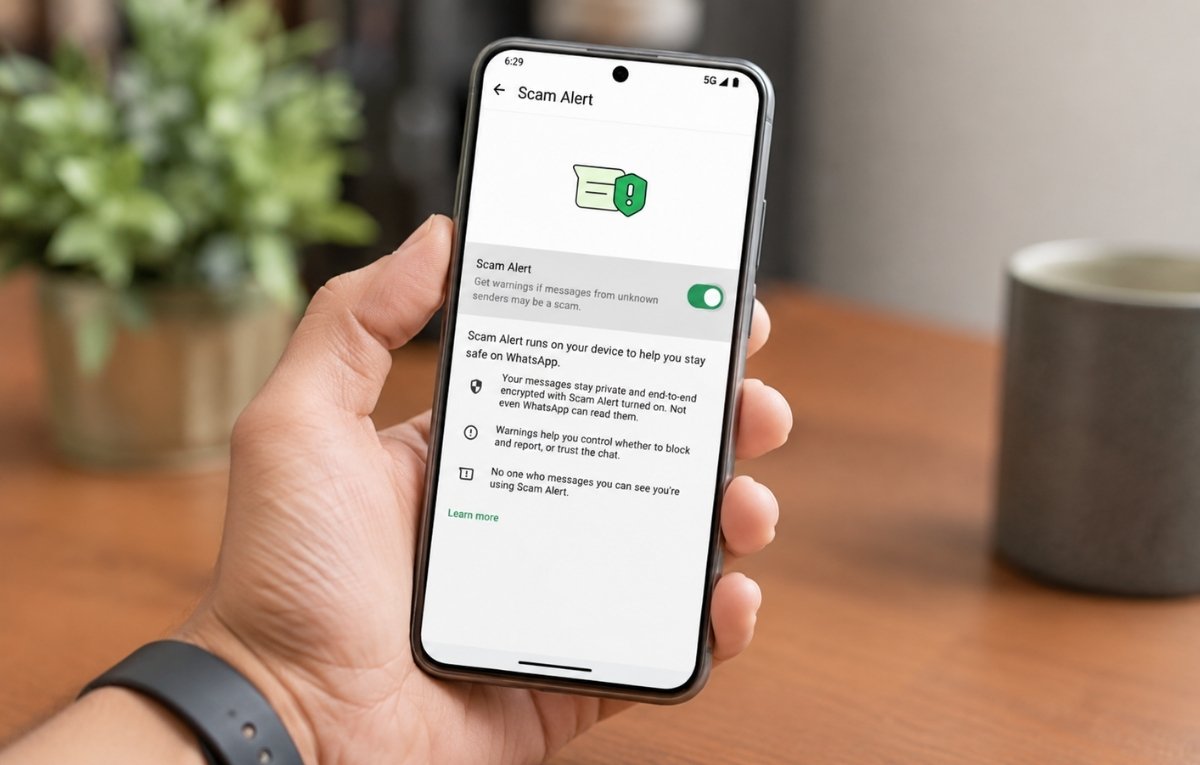
Meta has begun testing a new security feature called “Scam Alert” within WhatsApp, designed to help users identify and avoid potential scam messages. The feature is currently rolling out to a limited number of Android beta testers, with plans for a broader release in the future.
How Scam Alert Works
Scam Alert automatically scans incoming messages from unknown contacts, analyzing patterns commonly associated with fraudulent activity. If the system detects suspicious indicators, it displays a warning directly within the chat, notifying the user that the message “may be a scam.”
The sender is not notified of this warning. Instead, the recipient can choose to block and report the contact or mark the conversation as trustworthy. The feature also maintains a local log showing when Scam Alert was activated, which messages were flagged as suspicious, and which AI model version was used for analysis. This allows users to review the system’s performance over time.
On-Device Analysis for Privacy
A key aspect of Scam Alert is that it uses a machine learning model that runs directly on the user’s device. This means message content is not sent to WhatsApp, Meta, or any external server for analysis, preserving user privacy.
However, WhatsApp offers users the option to voluntarily share data with Meta to help improve the system. If a user marks a suspicious conversation as trustworthy, they can choose to share the last five messages from that chat with WhatsApp. Meta states this data will be used to refine the model and reduce false positives.
Limited Rollout and Future Plans
Scam Alert is disabled by default, requiring users to manually enable it. Availability is currently very limited, and installing the latest compatible WhatsApp beta for Android does not guarantee access. According to reports, WhatsApp plans to extend the feature to iPhone users, but no official timeline has been announced.
This initiative comes amid a rise in scam attempts via calls and messages, fueled by AI tools that enable fraudsters to craft more convincing messages. Messaging platforms are increasingly developing new systems to detect and curb these threats.
WhatsApp has recently introduced other security enhancements, including support for multiple passkeys and the ability to create more complex passwords with letters, symbols, and numbers.