

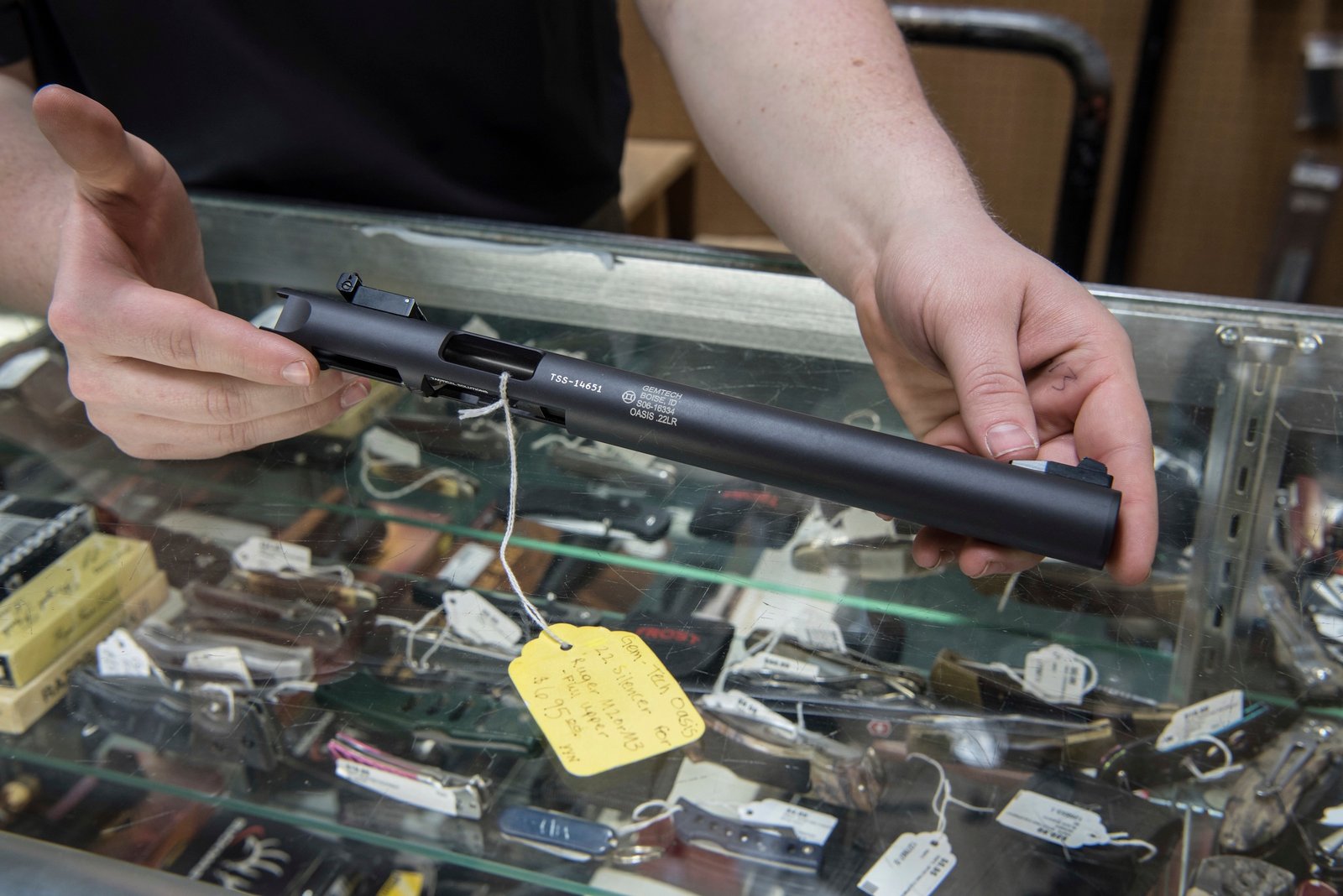
For nearly a century, silencers and short-barreled firearms like sawed-off shotguns have been subject to strict federal oversight under the National Firearms Act (NFA). That regulatory framework has now been dismantled, at least temporarily, following a federal court ruling in Texas.
Background of the NFA and the Court Decision
Enacted in 1934, the NFA required owners of silencers, short-barreled rifles, short-barreled shotguns, and certain other unusual weapons to register them with the federal government and undergo more extensive vetting than typical gun purchases. On August 5, U.S. District Judge James Wesley Hendrix in Texas ruled that these registration requirements are unconstitutional and issued an injunction blocking their enforcement. The judge gave the Trump administration one week to appeal, but the Department of Justice (DOJ) missed that deadline. As a result, as of August 13, the special regulations on silencers and short-barreled guns have been effectively suspended for the first time in over 90 years.
Immediate Reactions and Market Impact
Gun rights advocates have celebrated the decision. In Texas, congressional candidate Brandon Herrera, known online as TheAKGuy, was among the first to purchase a legal, unregistered silencer just after midnight at an event organized by Gun Owners of America. Hours later, the National Association for Gun Rights posted a video claiming silencers were “flying off the shelves” at a Palmetto State Armory store in Greenville, South Carolina, one of the plaintiffs in the case.
Scope of the Injunction
Although the injunction applies nationwide, its actual reach is unclear. Judge Hendrix limited it to the plaintiffs, their members, and current or future customers. The plaintiff list includes more than a dozen manufacturers, retailers, states, and gun rights groups, such as Gun Owners of America, the Firearms Policy Coalition, Palmetto State Armory, the Texas State Rifle Association, and SilencerCo Weapons Research. This broadens the pool of individuals who may no longer be subject to NFA registration requirements.
For prospective buyers who are members of these groups or who purchase from plaintiff retailers or manufacturers, buying a silencer or short-barreled weapon may now be as simple as buying a standard firearm. If purchased from a licensed gun store, a federal background check is still required. However, private sales from unlicensed sellers do not require such checks.
Uncertainty and Legal Ambiguity
The Bureau of Alcohol, Tobacco, Firearms and Explosives (ATF), which handles NFA registration, has declined to provide guidance. An ATF spokesperson told The Trace, “ATF is processing forms and will continue to process forms consistent with applicable law, regulations, and agency policy. ATF cannot provide legal advice or interpret court rulings for individuals.”
The Second Amendment Foundation, a gun rights organization, cautioned that the legal landscape remains murky. Executive director Adam Kraut stated, “It’s not quite time to break out the champagne. There are also numerous outstanding questions as to how the injunction will be interpreted by the federal government and how both the people and affected arms will be treated, both now and in the future.”
Path to Deregulation
Deregulation of silencers and short-barreled weapons has long been a goal of the gun rights movement. Last year, Republicans in Congress eliminated the $200 tax on these items, which contributed to the recent ruling. Without the tax, Judge Hendrix reasoned that the NFA’s registration requirement exceeded Congress’s authority.
According to ATF data, there are currently over 6.5 million registered silencers, 1.1 million short-barreled rifles, 200,000 short-barreled shotguns, and 96,000 items classified as “Any Other Weapons” (a category that includes atypical firearms like umbrella guns, pen guns, cane guns, pistols with foregrips, and smoothbore handguns designed to fire shotgun shells). All of these are now deregulated under the judge’s ruling.
Potential Consequences
Even if the deregulation is short-lived, silencers and short-barreled weapons could flood the market in the interim. If the district judge’s decision is later reversed, new owners might be required to retroactively register their NFA weapons, but how the ATF would enforce that remains unclear.
While silencers and other NFA weapons are rarely used in crimes today, they were involved in horrific crimes before the registration requirement existed. Gun control proponents argue that short-barreled weapons, though not more deadly or powerful than standard versions, are more maneuverable and concealable, making them potentially more attractive for criminal use.
Emma Brown, executive director of the gun reform group Giffords, criticized the DOJ’s inaction, saying, “Silencers and dangerous, easily concealable weapons can now easily get into the wrong hands and be used to harm innocent people. By not seeking a stay, the Department of Justice is putting the gun industry’s profits ahead of the American people’s safety.”
Definitions and Trends
Under federal law, a short-barreled rifle is any rifle with a barrel shorter than 16 inches or an overall length less than 26 inches. A short-barreled shotgun is any shotgun with a barrel shorter than 18 inches or an overall length less than 26 inches. Sawed-off shotguns, which are standard shotguns that have been physically shortened, fall into this category. If the barrel’s choke is removed, a sawed-off shotgun can produce a wider or more unpredictable spread, potentially increasing danger at close range.
In the past two decades, NFA registration applications have surged from about 42,000 in 2005 to over 1.5 million in 2025, with silencers making up the majority. For example, in May 2026, silencer applications accounted for 52% of all NFA applications. In 2025, the ATF processed more than 5.8 million NFA weapons in total.
What the Ruling Does Not Affect
The decision does not impact machine guns. A separate law bans civilian sale or possession of machine guns manufactured after 1986, and the NFA still requires registration, enhanced background checks, and a $200 tax for those that are legal to own.
The Trump administration has until October to appeal the judge’s decision. When asked why it did not appeal in time to delay the injunction, the DOJ responded, “The Department respects Americans’ Second Amendment rights and is currently assessing the impact of the court’s ruling.”