

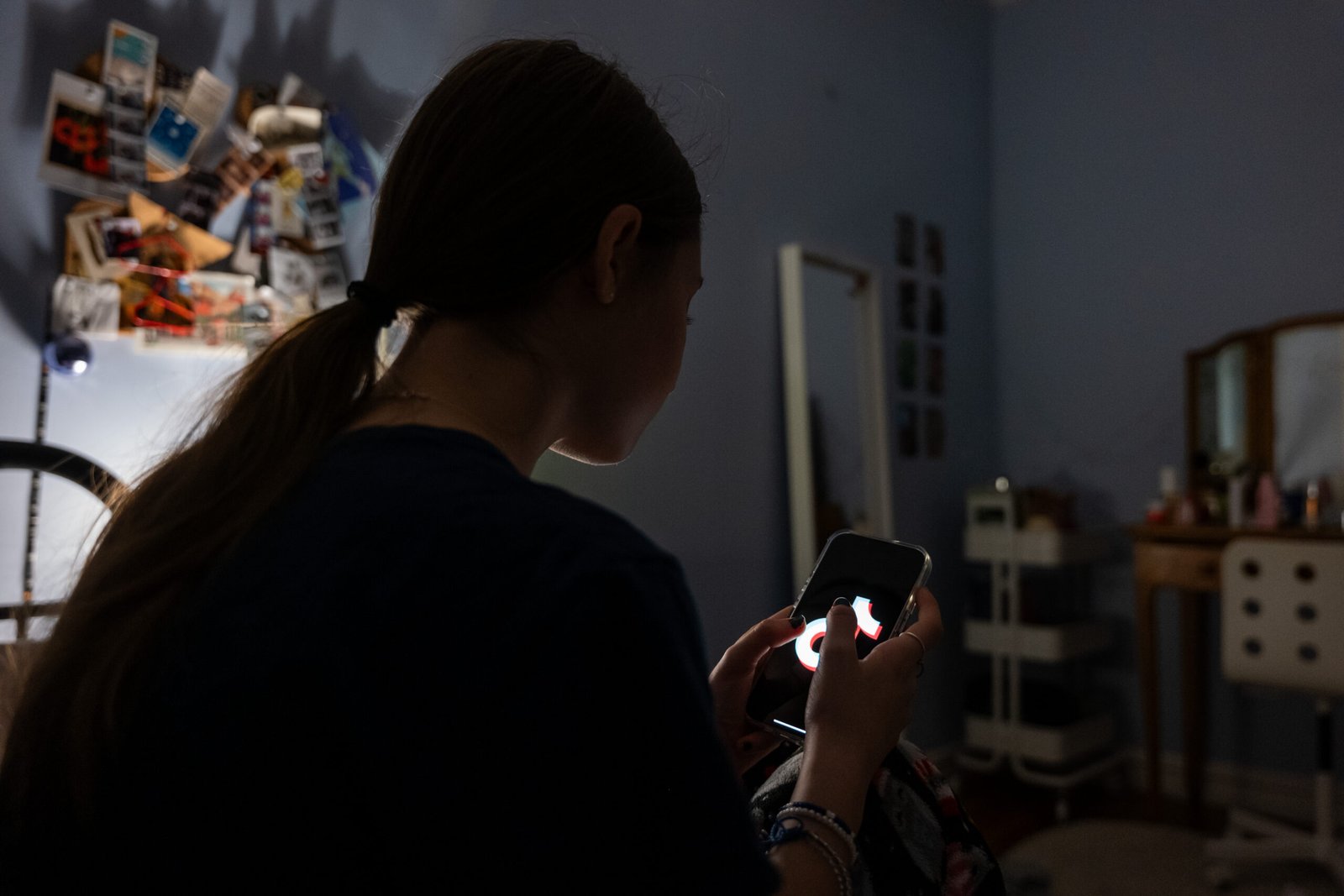
In 2022, the violence prevention organization Project Unloaded launched its first social media-focused campaign with a clear goal: to challenge the belief among young people that guns make them safer. Four years later, the results are in, and they suggest that social media platforms can be powerful channels for public health messaging aimed at teens.
“How do we harness the power of young people to drive culture change?” asked Nina Vinik, founder of Project Unloaded, reflecting on the Chicago-based organization’s online campaigns. “How do we make social media a tool for building safer communities? And how do we show the impact of that strategy?”
Through an analysis conducted earlier this year, Vinik and her colleagues may have found some answers. The findings, published in July, reveal that one in six Snapchat users aged 13 to 17 surveyed were aware of SNUG (Safer Not Using Guns), a campaign that uses Snapchat to share messages about firearm access. Teens who were aware of the campaign were 17 percentage points more likely to believe they were safer without guns.
Study Methodology and Key Findings
Project Unloaded partnered with ISG Research, an independent group, to survey more than 2,500 Snapchat users in the teenage demographic. The study was nationally representative and conducted between March and April. This comes at a time when firearm violence continues to affect thousands of young people each year—between 2014 and 2024, the number of children and teens dying by gun violence rose by 68%.
For young people like Esha Ambre, a sophomore at the University of California, Irvine, the study reflects her firsthand experience and that of her peers. “Gun violence is definitely relevant to any student today,” said Ambre, who became involved with Project Unloaded as a high school student. “No matter what you believe in politically, a fear of having your life impacted like this is something that we’re all in unison about.”
The Power of Meeting Teens Where They Are
By surveying teens and examining the various ways shootings affect their lives, the study highlights several potential solutions. Just as past health campaigns targeted cigarette smoking and car safety, the key to gun violence messaging lies in reaching people through the most popular and accessible channels.
“What’s really important and powerful in the findings is that when young people see the SNUG campaign, the message gets through,” Vinik told The Trace. “We are giving them important, valuable information about the risks that come with having or using guns; that is new information to them, and it sticks.”
Mental Health and Exposure to Gun Violence
Nearly half of the teens surveyed said that gun violence negatively affected their mental health. More than 80% had seen gun violence on social media, with 57% actually watching someone being killed or harmed online. Robert Schentrup, who manages youth training and engagement at Brady United, was struck by that finding. Schentrup, whose sister Carmen was killed in the 2018 mass shooting at Marjory Stoneman Douglas High School, said the campaign likely resonated with teenagers because it gave them “a narrative for something that they know and feel, but haven’t been able to put into words.”
“We have to think about it as meeting people where they are. Young people spend so much time on their phones and social media, so these are important tools in doing outreach and public health messaging,” he added.
Diverse Reach and Universal Impact
The respondents represented diverse backgrounds, with more than half of those aware of the campaign being teenage boys. A quarter were Black, 29% were Hispanic, and 67% came from homes with guns. Although the results showed that gun violence universally affects younger generations, its presence was more pronounced in communities with elevated risk of violence exposure. For instance, 64% of respondents exposed to gun violence said the issue negatively affected their mental health, compared to 48% who hadn’t experienced a shooting.
Ambre noted that the SNUG campaign’s political neutrality strengthened its message for young people. “It’s good for people to get advocacy messages online in ways that aren’t politicized,” she said. “You’re not reading another ad saying ‘Oh, you should be a Republican or Democrat.’ It’s more just about safety and making sure that we’re all taking care of ourselves and that we’re all feeling comfortable.”
Social Media’s Role in Gun Violence Prevention
The analysis comes at a time when researchers are voicing concerns about how social media usage can contribute to gun violence. A 2021 study analyzing community violence in Philadelphia showed that patterns of social media activity had specific effects on gun violence, with more interaction leading to more shootings. Another study looking at school shootings and social media found that usage, particularly in online discussion spaces, was connected to the timing of a school shooting.
“So many of the conversations that I have had with fellow survivors from Parkland, my friends who have been diagnosed with things like PTSD, depression, or clinical anxiety, show there are absolutely real consequences for folks who are in proximity to gun violence experience,” Schentrup said.
Ambre recounted the experiences of several friends who have been exposed to firearm violence. In the past year, when a gunman walked onto her college campus brandishing a weapon, text updates from the university’s alert system informed students of what was happening—a process that has become normalized in America.
“My advocacy and my love for advocacy started in 2020 when we all started using social media as a method to get the word out more about social injustice,” Ambre said. “You can’t really stay away from [gun violence] as much as people wish that they could. The truth is that it will eventually affect you in some way or another.”